
"Ethiopia Harrar"
400 article(s) found

Coffee beans-Harald Mocha, Ethiopia
Ethiopia Harald mocha Ethiopia Harald mocha (Harrar), an ancient coffee variety from the African plateau, exudes a rugged and strong wild flavor, the mellow thickness of Harrar coffee is obvious, and there is a sweet taste of black sugar and soil-based nutmeg aroma.
Introduction of boutique coffee beans Ethiopian coffee
Ethiopia is the hometown of Arabica coffee, and it is in the forests of Kaffa that you can see wild Arabica coffee. In Ethiopian, coffee is called Bun or Buna, and coffee beans (coffeebean) may be translated from Kaffa Bun. Arabica coffee was discovered early in the Harald area, probably from Kafa.

Flavor characteristics of Ethiopian Fine Coffee Ethiopian Coffee
Ethiopia is the hometown of Arabica coffee, and it is in the forests of Kaffa that you can see wild Arabica coffee. In Ethiopian, coffee is called Bun or Buna, and coffee beans (coffeebean) may be translated from Kaffa Bun. Arabica coffee was discovered early in the Harald area, probably from Kafa.
Introduction to Ethiopian Coffee, the hometown of Arabica Coffee
Ethiopia is the hometown of Arabica coffee, and it is in the forests of Kaffa that you can see wild Arabica coffee. In Ethiopian, coffee is called Bun or Buna, and coffee beans (coffeebean) may be translated from Kaffa Bun. Arabica coffee was discovered early in the Harald area, probably from Kafa.

Introduction to the flavor and taste characteristics of Ethiopian coffee manor with rich alcohol thickness
The highest grades of Ethiopian washed coffee Yega Chuefei G1 G2 Sidamo (Yirgacheffe, Sidamo) are Grade 2 and Grade 3 (G2, G3), while most of the sun-processed coffee in eastern Ethiopia are Grade 4 or Grade 5 (G4, G5). In many cases, level 4 coffee is marked as level 5 in order to reduce taxes. At present, the grading is not uniform and messy, because there is also sun processing.

Characteristics of grinding degree of Ethiopian coffee with soft acidity introduction to flavor description of varieties
Grade of Ethiopian coffee: Ethiopian washed coffee Yega Chuefei G1 G2 Sidamo (Yirgacheffe, Sidamo) has the highest grades 2 and 3 (G2, G3), while sun-processed coffee in eastern Ethiopia is mostly grade 4 or 5 (G4, G5). In many cases, level 4 coffee is marked as level 5 in order to reduce taxes. At present, the classification is not uniform and there are

Comparison of characteristics and flavors in Ethiopian Coffee producing areas _ how much is a pack of Ethiopian coffee beans
Professional coffee knowledge exchange more coffee bean information please follow the coffee workshop (Wechat official account cafe_style) Ethiopia is the hometown of Arabica coffee, it is in the forests of the Kaffa region that you can see wild Arabica coffee. In Ethiopian, coffee is called Bun or Buna, and coffee beans (coffeebean) may be from Ka

Description of flavor and aroma of Guji G2 coffee in Sidamo Valley, Ethiopia
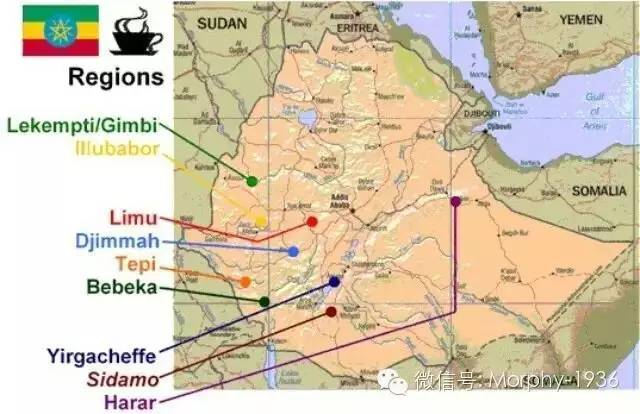
For the exchange of professional baristas, please follow the coffee workshop (Wechat official account cafe_style) there are eight major producing areas of Ethiopian coffee: Ekempti, Limu, Illubabor, Djimma, Harrar, Teppi/Bebeka, Sidamo, Yirgacheffe. Among them, there are three producing areas: Harrar, Sidamo and Yirgacheffe.

The grade flavor of Ethiopian coffee
Essel coffee is processed by two processing methods: sun and water washing. The flavor of coffee processed by different processing methods is very different. Generally speaking, the alcohol thickness and soil taste of washed Sidamo, Yirgacheffe and Limmu coffee are slightly lower, and the taste of sun-processed coffee is more wild. But Ethiopian coffee may taste different from batch to batch, which requires more cup tests before it can be found.

Ethiopian coffee introduction Ethiopian coffee beans exquisite coffee beans and introduction
Ethiopia is the hometown of Arabica coffee, and it is in the forests of Kaffa that you can see wild Arabica coffee. In Ethiopian, coffee is called Bun or Buna, and coffee beans (coffee bean) may be translated from Kaffa Bun. Arabica coffee was discovered early in the Harald area.

Ethiopian Coffee Estate Introduction and Flavor Description Ethiopian Coffee Estate
Professional coffee knowledge exchange More coffee bean information, please pay attention to coffee workshop (Weixin Official Accounts cafe_style) in the Bible. In Genesis, Adam and Eve were expelled from the Garden of Eden for eating the fruit of the Tree of Knowledge. This fruit, since childhood reading books have been identified as apple (snake) fruit undoubtedly. But in fact, the Bible never mentions it by name; the first coffee tree happens to be the same tree

Ethiopian Coffee introduction Coffee beans Coffee processing Coffee Flavor Ethiopian Coffee details
Ethiopia is the hometown of Arabica coffee, and it is in the forests of Kaffa that you can see wild Arabica coffee. In Ethiopian, coffee is called Bun or Buna, and coffee beans (coffeebean) may be translated from Kaffa Bun. Arabica coffee was discovered early in the Harald area, probably from Kafa.

Ethiopian boutique coffee introduces boutique coffee beans characteristics of Ethiopian boutique coffee
Ethiopia is the hometown of Arabica coffee, and it is in the forests of Kaffa that you can see wild Arabica coffee. In Ethiopian, coffee is called Bun or Buna, and coffee beans (coffeebean) may be translated from Kaffa Bun. Arabica coffee was discovered early in the Harald area, probably from Kafa.

An introduction to the origin of coffee-- characteristics of Ethiopian coffee taste
Ethiopia is the hometown of Arabica coffee, and it is in the forests of Kaffa that you can see wild Arabica coffee. In Ethiopian, coffee is called Bun or Buna, and coffee beans (coffeebean) may be translated from Kaffa Bun. Arabica coffee was discovered early in the Harald area, probably from Kafa.

Boutique Coffee introduces Ethiopian Coffee Yega Sheffield Coffee Sidamo Coffee Harald Coffee
Ethiopia is the hometown of Arabica coffee, and it is in the forests of Kaffa that you can see wild Arabica coffee. In Ethiopian, coffee is called Bun or Buna, and coffee beans (coffeebean) may be translated from Kaffa Bun. Arabica coffee was discovered early in the Harald area, probably from Kafa.

Coffee Flavor description of Ethiopian Coffee Manor Coffee Flavor description of roasting degree Price planting Environment
Ethiopian coffee beans grow in close to the natural environment, after years of planting under the same growth conditions, Ethiopian coffee beans have gradually adapted to the environment here. More than 60% of coffee beans are grown in forests or semi-forests. Large-scale coffee-growing villages account for about 35% of the country's total coffee production. Many of these are used.

Ethiopian coffee beans G1 and G2 are just different in the number of defective beans?
Ethiopian coffee beans G1 and G2 are just different in the number of defective beans. After picking beans without special screening and treatment, uneven appearance and maturity are mixed together, the process is relatively rough, so the quality of coffee beans is unstable and prone to defective beans. two。 Coffee farmers usually find an open space near their home to deal with it, so there are often a lot of miscellaneous things on the ground.

Development of Ethiopian Coffee characteristics of Ethiopian Coffee
Coffee Workshop (official Wechat account cafe_style) Coffee from Africa and Arabia: Ethiopian coffee was originally developed in Yemen as a commercial crop, but Arabica coffee tree originated in the highlands across the Red Sea in western Ethiopia, where people are still harvesting wild berries. Today
Coffee processed by sun and water washing, and processed by different processing methods.
Ethiopia is the hometown of Arabica coffee, and it is in the forests of Kaffa that you can see wild Arabica coffee. In Ethiopian, coffee is called Bun or Buna, and coffee beans (coffeebean) may be translated from Kaffa Bun. Arabica coffee was discovered early in the Harald area, most likely